Need help? Visit our service centers today.

get care
Donate today
This September marks 25 years since 9/11. For most of the country, the wars that followed feel like history. But for too many of the men and women who fought in them, they never really ended. The battle just moved somewhere no one can see: the mind. And there's no medal, no recognition, for fighting a war like that.
Since 9/11, more service members and veterans have died by suicide than in combat.
1 out of every 2 combat veterans who served post-9/11 have more than one mental health disorder. That's too many. But you can help, by funding the therapy sessions that give veterans a reason to keep showing up and a way back to mental wellness.
Tax ID / EIN: 94-2260626 | As a registered 501(c)(3) nonprofit organization, your donations are tax-deductible to the maximum extent permitted by law.

.svg)
.png)
Many people assume that once a service member comes home, the VA takes care of the rest. And the VA does incredible work, but like most of the mental health field right now, it's stretched thin.
Healing rarely starts with a mental health appointment anyway. More often, it starts with a housing problem, a benefits claim, or help getting a job – the kind of common need that brings a veteran through our doors in the place. It's in solving that problem that trust builds, slowly, until a veteran is ready to talk about what's really going on in their mind.

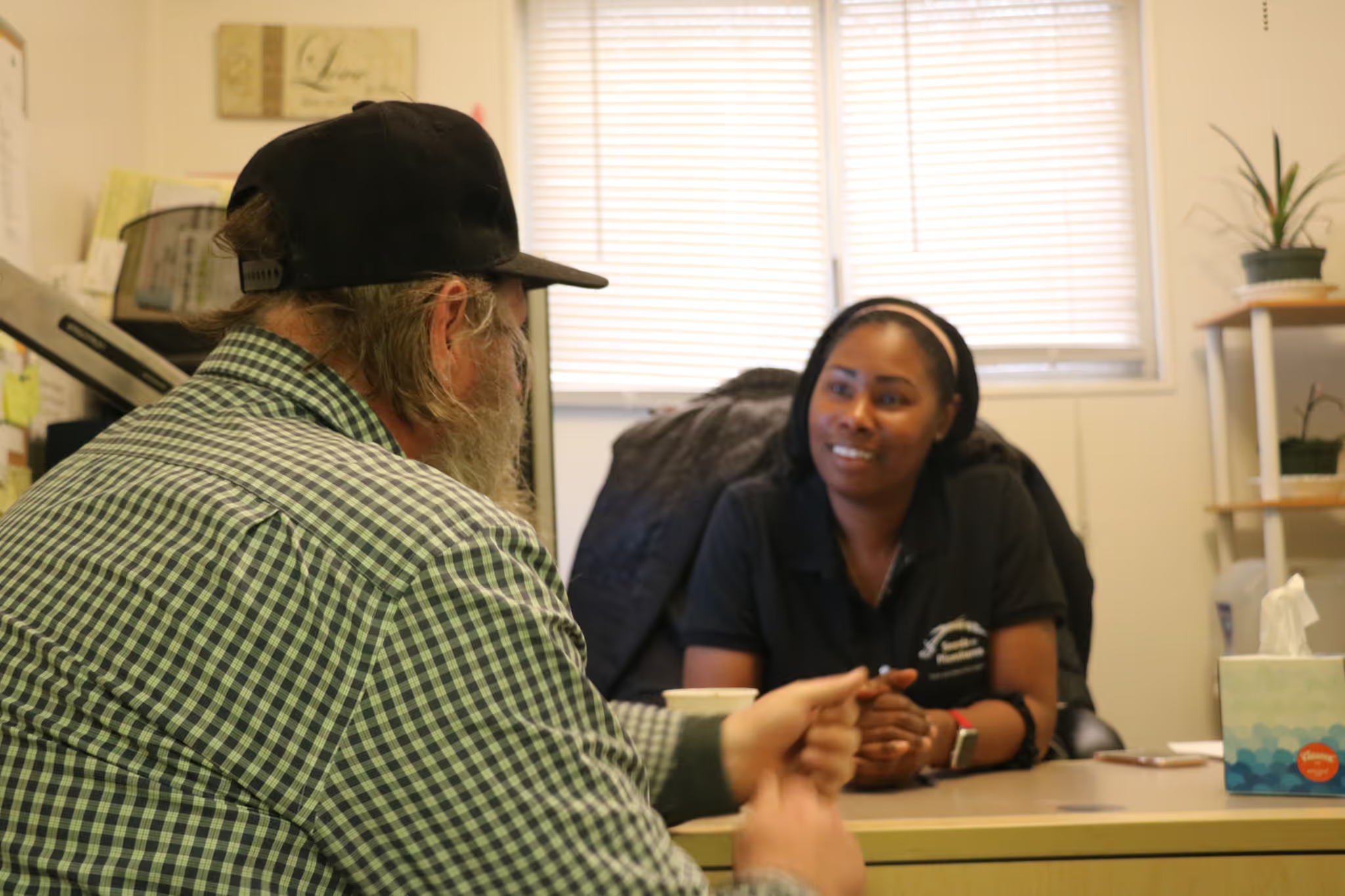
At Swords to Plowshares, we don't have a solution to the wounds of war. But we do have something that works: a mental health team that keeps calling. That offers regular therapy sessions to rebuild a veteran's trust in their own mind. That doesn't wait for a crisis to reach out.
That consistency gives veterans a reason to keep showing up.
"Sometimes hope begins when one person refuses to walk away when you're struggling," Daren says.
.png)
John found Swords when he no longer trusted his own mind. Veterans are trained to always scan their surroundings for danger. It's what keeps units alive. But the training doesn't just turn off when they come home. When John came home, hypervigilance followed him into rooms that were never dangerous to begin with. Over time, this deepened into a growing sense of paranoia. Some days felt like a nightmare he couldn't wake up from.
Today, he meets with Swords' team twice a week. Together they're using talk therapy and psychotherapy to help him process what happened to him in service, getting his mind back to a reality that feels safe and hopeful. He wants to reunite with his kids and trust his own mind again. He's not there yet, but twice a week he shows up.
.png)
.png)
Consistency isn’t free. And this kind of healing doesn’t happen at scale. It happens one relationship at a time. Every phone call, every session, every hour our mental health team spends helping a veteran exists because someone made the decision to fund it.
By giving today, you can be that someone. Your gift is what allows our team to continue checking in on veterans in crisis, and what keeps counseling sessions on the calendar for veterans like John.

.svg)